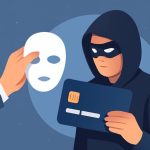
The digital underground is vast, and among its most persistent threats is the world of carding—a term that describes the unauthorized use of stolen credit card information to make fraudulent purchases or to launder money. For years, cybercriminals have congregated on specialized platforms, many of which are accessible only through anonymizing networks, to trade in stolen financial data, sell hacked accounts, and exchange sophisticated fraud techniques. Searching for a carding websites list has become a surprisingly common activity, not only among aspiring fraudsters but also among security researchers, business owners trying to understand their exposure, and curious individuals who stumble upon dark web lore. Yet, the very existence of such lists underscores a deeper problem: the infrastructure of payment fraud is alive, constantly evolving, and far more organized than most people realize.
To fully grasp what a carding websites list represents, you must first understand that carding is no longer a fringe hobby for script kiddies. It has matured into a multi‑billion‑dollar illicit economy complete with customer support, user reviews, escrow services, and even affiliate programs. The sites that populate these lists range from fully automated shops that sell “live” credit card details to complex forums where veteran fraudsters mentor newcomers. Many of these platforms mimic legitimate e‑commerce experiences so convincingly that the untrained eye might mistake them for a regular online store—until they notice that the product catalog consists of Visa Infinite numbers, bank login credentials, and fullz (comprehensive identity packages). The most active marketplaces often boast tens of thousands of registered users and turnover rates that rival small‑nation GDPs.
For businesses, financial institutions, and everyday consumers, understanding the anatomy of a carding websites list is not about satisfying morbid curiosity. It is about recognizing the threat vectors that lead to drained bank accounts, damaged credit scores, chargeback nightmares, and irreparable brand reputation loss. In this deep dive, we will explore how carding websites operate, the different forms they take, the economic forces that keep them afloat despite global law enforcement crackdowns, and—crucially—what individuals and organizations can do to immunize themselves against this persistent threat.
What Exactly Are Carding Websites and How Do They Function?
At their core, carding websites are digital marketplaces and communication hubs designed to facilitate payment card fraud. They exist in a gray zone that spans the open internet, encrypted chat platforms, and the dark web. Some operate as standalone online shops with shopping cart functionality, while others are sprawling forums where members trade data, tools, and knowledge. The most well‑known models include card shops, which automatically sell stolen card data, and carding forums, which serve as community‑driven spaces for sharing methods, selling software, and verifying sellers through reputation systems. These sites are the engine rooms of the fraud ecosystem, connecting data thieves with the people who will actually use the stolen information to buy high‑end electronics, gift cards, or even cryptocurrency.
To appreciate the mechanics behind a typical carding websites list, imagine a dark web shop that looks startlingly similar to Amazon. The site might list thousands of credit card entries, each tagged with information such as the issuing bank, the card brand, the country of origin, the BIN (Bank Identification Number), the card level (Classic, Gold, Platinum), and even the estimated balance or credit limit. Prices vary dramatically: a standard US‑based Visa Classic with a low verified balance may sell for as little as $10, while a high‑end corporate card with known spending power can fetch several hundred dollars. The listings are not static; fresh “dumps” are uploaded daily, and vendors compete fiercely on quality and reliability. Buyers can filter results by region, bank, and card type, then pay using cryptocurrencies like Bitcoin or Monero.
Forums add another layer of sophistication. A dedicated carding websites list might point to platforms where members participate in sub‑forums dedicated to specific aspects of fraud: drop services (addresses used to receive physical goods), cashout guides, opsec (operational security), and even vendor verification threads where trusted members vouch for data sellers. Many forums require an invitation or a paid membership fee, and they enforce strict rules to keep law enforcement out. The combination of shops and forums creates a self‑policing, hyper‑efficient black market that constantly adapts to new security measures adopted by banks and payment processors.
The technology stack powering these sites is often deceptively simple. Many card shops run on modified versions of open‑source e‑commerce platforms, while forums are built on widely available bulletin board software. What sets them apart is how they hide. Most are hosted on the Tor network as onion services, which obscure the physical location of servers and the identities of both operators and visitors. Addresses change frequently as sites are taken down or voluntarily relocate. This is one reason why a publicly circulating carding websites list is so perilous: it inevitably becomes outdated yet continues to lead unsuspecting users to either police‑controlled honeypots or malware‑laced traps set by rival criminals.
Payment mechanisms within these sites also mirror legitimate business practices. Escrow systems hold buyers’ cryptocurrency until the digital goods are delivered and verified, which reduces the risk of exit scams. Some sites even offer replacement guarantees if a batch of card numbers turns out to be invalid—a perverse version of a refund policy. Affiliate programs reward users who bring new customers to the platform, incentivizing the spread of referral links across illicit Telegram channels and underground social media. All of these features make a carding websites list not just a directory of URLs but a snapshot of a mature, resilient industry that treats fraud as a service.
Inside a Typical Carding Websites List: What Gets Traded and Why It Matters
When someone compiles or consults a carding websites list, they encounter far more than a handful of dark web links. The most detailed lists classify platforms by type, trustworthiness, and currency, often rating them like a business directory. A comprehensive list might include CVV shops that sell the three‑digit security codes together with cardholder details, dump shops specializing in magnetic stripe data for physical card cloning, and fullz stores where complete identity profiles—including Social Security numbers, dates of birth, and mother’s maiden names—are bundled together. Other entries point to cashout services that promise to turn stolen data into untraceable cryptocurrency or to live checker tools that verify whether a card is still active before it is used for a purchase.
The merchandise catalog of a typical card shop reads like a criminal’s shopping mall. “Random US” dumps, “EU high balance” cards, and “non‑VBV/3DS” (non‑Verified by Visa/3‑D Secure) bins are among the most coveted items because they bypass additional authentication steps. Buyers also look for aged cards with longer transaction histories, which raise fewer red flags with anti‑fraud systems. Beyond stolen card data, many platforms sell access to compromised PayPal accounts, bank logins, and even business email accounts that can fuel business email compromise (BEC) scams. Some lists even catalog RDP (Remote Desktop Protocol) and SSH credentials, giving fraudsters control over remote computers whose legitimate broadband connections and geographic locations can be used to mask fraudulent transactions.
Why does the existence of a carding websites list matter to someone who never intends to visit the dark web? Because every entry on that list represents a potential leak point for financial data that might have come from a data breach at a website where you shopped, a hotel where you stayed, or a medical provider that stored your billing information. Understanding what circulates on these markets is the first step toward understanding how your own information might be monetized. For instance, when a major retailer suffers a credit card breach, the stolen data often surfaces on multiple carding sites within days, sorted by geography and card type, and sold in bulk. The carding websites list becomes a live inventory of compromised identities, making the breach’s impact tangible and explaining why cybersecurity professionals monitor these resources closely.
Another critical element often found on a carding websites list is the presence of tutorials and guides. Many platforms feature entire sections devoted to “carding 101,” where experienced fraudsters teach novices how to use VPN chains, configure sock5 proxies that match the cardholder’s location, and manipulate browser fingerprints to avoid detection by anti‑fraud engines. They share detailed walkthroughs for popular e‑commerce sites, noting which stores are most lenient and which payment gateways are easiest to bypass. This democratization of fraud knowledge means that even individuals with minimal technical skill can attempt carding, which in turn increases the volume of attacks that businesses face daily. The commodification of know‑how is one of the most overlooked yet dangerous aspects of the carding economy, because it lowers the barrier to entry to almost zero.
For organizations, a carding websites list is also a stark reminder of how fraud cycles work. Stolen card data has a shelf life, measured in hours or days, before issuers cancel the numbers. This urgency drives a constant churn of testing and exploitation. Fraudsters use automated bots to run thousands of small‑dollar “carding attacks” against online merchants, identifying which cards are still alive. They then use the validated cards for larger purchases or sell them at a premium. Entire secondary markets exist for pre‑checked data, which fetches higher prices because the risk of decline is lower. Recognizing this cycle helps businesses understand why their checkout pages are bombarded with tiny authorization attempts and why investing in AI‑powered fraud detection that recognizes subtle patterns is no longer optional—it is an operational necessity.
Protecting Yourself and Your Business from the Fallout of Carding Networks
Confronting the reality behind any carding websites list can feel overwhelming, but the very transparency of these black markets offers a pathway to stronger defense. By studying the tactics and preferences that fraudsters openly discuss, businesses can harden their payment systems, and consumers can adopt habits that dramatically reduce their vulnerability. The most effective countermeasures are not arcane; they are practical, layered, and often already within reach for most organizations.
For e‑commerce merchants, the first line of defense is the rigorous implementation of 3D Secure 2.0, which adds an additional authentication layer without overly friction‑filled experiences for legitimate customers. Because many carding websites explicitly flag bins that do not enforce VBV or 3DS as “easy targets,” turning on this feature across all eligible transactions instantly removes a merchant from the lowest‑hanging‑fruit category. Combine this with velocity checks that monitor the number of transaction attempts from a single IP address or device fingerprint in a short timeframe. Carders rely on high‑speed testing scripts, and setting sensible velocity limits can block the bulk of automated validation attempts before they ever reach the payment gateway.
Address AVS (Address Verification Service) and CVC checks consistently, and ensure your gateway is configured to decline transactions that fail these matches. While some sophisticated fraudsters have access to fullz that include the billing address, the vast majority of data sold on a carding websites list is incomplete, and strict AVS mismatches will stop them cold. For an additional layer, leverage device fingerprinting solutions that track hardware and browser characteristics. If the same device is attempting to use five different credit cards in under an hour, the fingerprint will expose it even if the IP address changes with each attempt. Behavioral biometrics—such as mouse movement patterns and typing cadence—can further distinguish between genuine customers and bots or fraudsters working from scripted environments.
Payment orchestration platforms that route transactions to multiple acquiring banks can also dilute risk. If a merchant is hit with a high chargeback ratio on one MID (Merchant Identification Number), having the ability to shift volume to another prevents shutdowns while the situation is remedied. At the same time, deploying machine learning models trained on historical transaction data can spot subtle anomalies: an order for a high‑value handbag placed at 3 a.m. local time, shipped express to a re‑shipping center, and paid with a card issued in a different continent. These combinatorial signals are exactly what carders try to hide, and an adaptive model learns their evolving tricks far faster than rule‑based systems.
From the consumer’s perspective, the best defense against ending up as a line item on a carding websites list is vigilant account hygiene. Activate transaction alerts from your bank and credit card issuer so that you receive instant notification of any charge. Use virtual card numbers when shopping with unfamiliar online retailers; many banks now offer one‑time‑use numbers that expire after a single transaction, rendering any stolen data useless. Regularly review your statements rather than waiting for month‑end, and consider freezing your credit with major bureaus if you suspect your personal information has been exposed in a breach. The small inconvenience is nothing compared to the weeks or months of recovery that follow full‑blown identity theft. Also, avoid reusing passwords, especially for sites where you store payment methods; credential stuffing attacks often provide the initial access that fuels the data sold on carding forums.
Law enforcement agencies worldwide are not idle, and their efforts have led to some spectacular takedowns of major carding hubs. Operations like the seizure of the notorious Joker’s Stash marketplace demonstrate that no platform is invincible, but the hydra‑like nature of the carding ecosystem means that new sites appear almost as soon as old ones are dismantled. This is why a static carding websites list becomes obsolete within weeks—and why any legitimate cybersecurity firm that monitors these undergrounds focuses on dynamic threat intelligence feeds rather than fixed directories. Businesses that invest in real‑time monitoring services gain actionable alerts when their payment pages are discussed on dark web forums or when batches of cards associated with their BIN range appear for sale. Such early warning can trigger proactive card re‑issuance campaigns or increased friction during checkout for affected customer segments, stopping fraud before it scales.
The economic incentives that sustain carding websites are powerful, but they are not unbreakable. When online merchants collectively elevate their security posture, the profitability of carding plummets. If checkout processes demand biometric confirmation or passkey authentication, the stolen data sold on a carding websites list becomes far less liquid. If banks aggressively implement artificial intelligence that identifies and blocks suspicious low‑value test transactions, the live‑checker economy collapses. Fraudsters are, above all, opportunists driven by return on investment. By making the cost of successful fraud exceed the potential gain, the entire carding supply chain weakens—from the hacker who exfiltrates the database to the reseller who brags about it in a hidden sub‑forum. Understanding the scope and mechanics of these criminal networks is not an endorsement or an invitation; it is a necessary step toward building a digital world where a carding websites list becomes nothing more than an artifact of a less secure past.