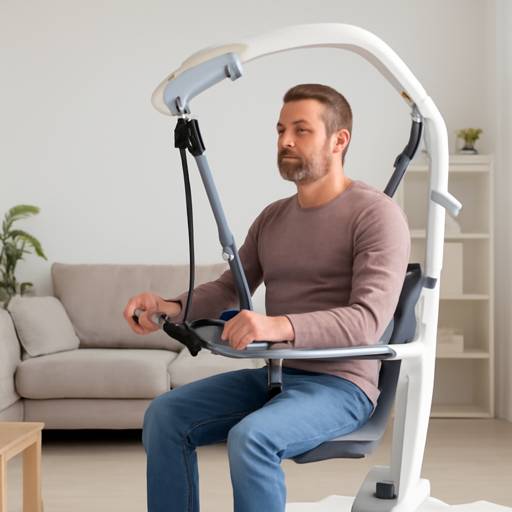
For individuals recovering from surgery, managing chronic conditions, or experiencing age-related weakness, the simple act of standing up can become a daunting challenge. Caregivers often shoulder the physical burden, risking back injuries and fatigue. An electric sit to stand lift bridges this gap, offering a dignified, safe, and efficient solution. Unlike full-body lifts that require total patient passivity, these devices empower users who retain some lower body strength and weight-bearing ability. By utilizing a padded sling that supports the back and thighs, the lift gently guides the patient from a seated to a standing position, reducing strain on both the user and the caregiver. This technology has revolutionized patient handling in hospitals, long-term care facilities, and private homes, enabling more frequent and safer transfers that preserve muscle tone and circulation. The key distinction of electric models lies in their motorized operation, which provides smooth, controlled movement with minimal effort from the caregiver. As the population ages and the demand for effective mobility assistance grows, understanding the capabilities and nuances of these lifts becomes essential for healthcare professionals, family caregivers, and anyone invested in maintaining quality of life.
How Electric Sit to Stand Lifts Transform Patient Transfers
The core function of an electric sit to stand lift is to assist a patient from a seated position (in a chair, wheelchair, or bed) to a standing posture, then pivot or walk to a target destination such as a toilet, shower chair, or another seat. This process, known as a squat-pivot transfer, relies on the patient’s ability to bear weight on their feet and cooperate with the lift’s motion. The electric version eliminates the manual pumping or cranking required by hydraulic alternatives, offering consistent speed and power at the touch of a button. For caregivers, this translates into drastically reduced physical effort. The lift’s base slides under the chair or bed, and the sling is positioned behind the patient’s back and under their buttocks. Once secured, the lift raises vertically and tilts forward slightly, mimicking the natural biomechanics of standing. The patient can then place their hands on the lift’s handles for balance while the caregiver manages the steering wheels and brakes. Studies have shown that using an electric sit to stand lift can lower the risk of caregiver back injuries by over 70% compared to manual transfers. Furthermore, patients experience less anxiety because the movement is gradual and predictable. The lift encourages active participation, which helps maintain leg muscle strength and reduces the likelihood of pressure ulcers from prolonged sitting. Consistency in transfer technique also improves — the lift’s programmed motion ensures each transfer follows the same safe path, minimizing unpredictable jerking or tipping. In practice, these devices allow patients who might otherwise be bedbound to regain a degree of independence, moving more frequently throughout the day. This mobility directly supports better respiratory function, digestion, and psychological well-being.
Key Features to Look for in a Quality Electric Sit to Stand Lift
Selecting the right electric sit to stand lift requires careful evaluation of several critical features to ensure safety, durability, and comfort. Weight capacity is paramount; most models support patients from 350 to 600 pounds, but higher-capacity units are available for bariatric needs. The base width must be adjustable to fit around different chair legs and wheelchair frames — a wider base offers greater stability, while a narrower one improves maneuverability in tight spaces. Look for lifts with a low lifting range (typically starting around 18 inches from the floor) to accommodate low-profile seating and ensure the sling can be placed correctly. The sling material itself should be breathable, washable, and designed to prevent skin shear. Many models feature a built-in scale for weight monitoring, which is valuable for patients on fluid or nutrition management protocols. Battery life is another crucial consideration: a reliable electric lift should provide enough power for a full day of transfers (often 20–30 cycles) on a single charge, and include an emergency backup system for power failures. Maneuverability depends on wheel quality — look for large rear wheels with locks and front swivel casters for smooth navigation over thresholds and carpet. Some advanced models offer a powered walking assist feature, where the lift gently guides the patient forward during the standing transfer, reducing the need for the patient to actively step. Safety features such as emergency stop buttons, anti-slip footplates, and audible alarms when the battery is low are non-negotiable. Finally, consider the weight of the lift itself; a lighter unit (around 100–130 pounds) is easier for a single caregiver to push and store, while still being robust enough for daily clinical use.
Real-World Impact: Case Studies of Sit to Stand Lift Use in Home Care
To illustrate the transformative nature of electric sit to stand lifts, consider the case of a 72-year-old man recovering from a hip replacement. Prior to the lift, his wife was performing manual standing transfers, which led to chronic lower back pain and fear of causing a fall. After introducing a compact electric sit to stand lift, the couple reported a dramatic change: the husband could stand independently for the first time in weeks, using the lift’s handles for support, while the wife operated the controls without strain. Within a month, the patient’s balance improved enough to transition to a walker, partly because the lift allowed him to practice standing multiple times daily without exhausting his caregiver. In another example, a skilled nursing facility implemented a protocol requiring all sit-to-stand transfers to use an electric lift for patients with partial weight-bearing ability. Over a six-month period, the facility recorded a 45% reduction in patient fall incidents during transfers and a 60% decrease in staff-reported musculoskeletal injuries. The equipment paid for itself in reduced workers’ compensation claims alone. A third scenario involves a young adult with a spinal cord injury who uses a sit to stand lift to transfer from bed to wheelchair and then to a standing frame. The electric lift enabled him to participate in standing therapy at home, which improved his bone density and circulation, delaying secondary complications. These cases underscore that the lift is not merely a transfer tool; it is an intervention that actively supports rehabilitation, caregiver health, and long-term dignity. The availability of portable, battery-operated models has also allowed these lifts to be used in outdoor settings — for instance, helping a patient stand to enjoy a garden or transfer into a car — expanding the boundaries of independent living.